
Self Drive Tanzania Destinations – Places to Visit with a 4×4 Road trip in Tanzania
The Brain of Africa, Tanzania has some of the best national parks one can visit when they consider touring East Africa. As you self-drive in Tanzania, you will experience the greatness of mother-nature.
When you consider a self-drive safari in Tanzania, you will have guaranteed adventure, extreme flexibility as you can easily change your itinerary according to your own whim thus tailoring your experience according to your personal interests. You can choose to sight lions in Tarangire national park before you go to the home of the great immigration in Serengeti national park.
With a reliable 4×4 car rental in Tanzania, tourists embarking on a self-drive safari are assured of a seamless, private and enjoyable wildlife safari experience across the country’s numerous national parks.
Some of the destinations Tanzania has include:
Serengeti National Park: this is the most iconic park in Tanzania and a true symbol of wilderness. It is situated in the northern part of the country. Serengeti National Park is a vast and famous for its abundant wildlife, and the spectacular annual Great Wildebeest Migration. Covering an area of approximately 14,763 square kilometers, worth visiting during your self-drive in Tanzania.
While here, you will view exceptional wildlife such as lions, leopards, elephants, buffaloes and rhinos that are rare but present. The park also have over 500 recorder bird species so that you can enjoy bird watching. Game drives here are very favorable since there is a great number of animals, hot air balloon safaris and guided walks are
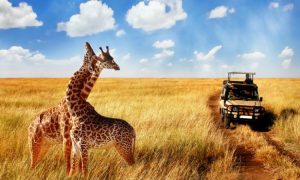
The park is home to a wide variety of animals, including lions, elephants, giraffes, and hippos, as well as over 500 species of birds. Visitors can enjoy game drives, hot air balloon safaris, and guided walks to explore the park’s diverse ecosystems. This destination is one of the most visited in the all of East African region and one of the best priorities for all wildlife lovers who wish to get to Africa for adventurous experience. You can also enjoy the Manyatta experience from the local Masai people, observing their unique ways of life.
Having a self-drive safari in Serengeti national park requires one to have a 4×4 vehicle with a high ground clearance that enables it to navigate the terrain easily, especially during the rainy season.
Serengeti national park can be visited all year round such as in the dry season (June to October) and the wet season (April to May)
Tangire national park: is Tanzania’s underrated safari destination that covers 2,859 square kilometers that is protected area in the Manyara Region of northern Tanzania, only 120km southwest of Arusha. It is known for its high concentration of elephants and baobab trees.
While self-driving, reaching this park will take you approximately 2-3 hours from Arusha. Tangire national park is famous for large elephant herds, over 550 species of birds making it one of Tanzania’s top bird watching destinations. The birds range from the colorful bee-eaters to the ostriches and birds of prey.
Other wildlife includes zebras, wildebeest, giraffes, cheetah, buffaloes, lions and leopards among others.
One can visit Tangire national park during any time of the year such as the green season (November-May), dry season (June to October) and the rainy season (March to May)
Activities one can undertake in Tarangire national park include game viewing, bird watching, nature walks, walking safaris and cultural experience.
Self-driving in Tangire national park requires one to have a 4×4 vehicle with a high ground clearance that enables it to navigate the terrain easily, especially during the rainy season.
Ngorongoro national park: As you self-drive in Tanzania, you will drive north of the country and west of her capital to find the Ngorongoro Conservation Area. It is a protected area and UNESCO World Heritage Site that covers 8,300 square kilometers and is re-known for its diverse wildlife and multiple ecosystems. It is named after the Ngorongoro Crater, the world’s largest intact and unfilled volcanic caldera.
While here, you will see the Ngorongoro crater that covers an areas of 19 kilometers wide and 600 meters deep, making it support a great population of wildlife, making wildlife viewing possible throughout the year.
The diverse ecosystems will also capture your eyes as you will sight the savannah grasslands, soda lakes such as Magadi, highland plain, volcanic terrain, forests and wetlands. The big five are also a highlight during your trip as you will see the lions, elephants, leopards, buffaloes and the black rhino which is rare but regularly spotted.
From June to October (dry season), March to May (wet season) and January to February are the times one can visit Ngorongoro national park, that is to say all year round.
Lake Manyara National Park: is a protected area in the Arusha Region of northern Tanzania along the Great Rift Valley. It is known for its tree climbing lions, flamingos and water birds, diverse habitats and rift valley escarpment views.
Lake Manyara National Park is situated at the base of the Great Rift Valley escarpment and covers about 325 square kilometers, with the alkaline Lake Manyara occupying almost two-thirds of the park during the rainy season.
A standard 4×4 is recommended but driving here is generally less challenging compared to larger, more remote parks. Here, you can sight tree-climbing lions, buffaloes, giraffes, zebras, elephants, baboons and blue monkeys.
In both the dry and wet season, you can visit the park because in the former, the roads are passable and wildlife viewing is easy while in the latter, roads are impassable and you need a full-time 4×4 vehicle for easy navigation.
Ruaha National park
This is the largest national park in Tanzania as it covers an area of 20,000 square kilometers and a true wilderness for experienced self-drive travelers. It forms part of the vast Ruaha- Rugwa ecosystem and is a virgin land that is rarely visited since it is in a remote area but offers raw safari experiences and dramatic landscapes.
The park is named after the Great Ruaha River, which acts as a lifeline for wildlife, especially during the dry season.
With a 4×4 vehicle of high ground clearance, you can easily navigate the rugged terrain, making your trip more adventurous. As you self-drive in Ruaha national park has great population of lion prides and elephants, scenic river systems. Self-drive will also allow the tourist explore riverbanks, open plains and rocky hills at their own whim.
The great wildlife experience will make you want to live in this country as you have the opportunity to sight over 570 bird species, wild dogs, greater and lesser kudu, leopards and cheetahs, African elephants and large prides of lions.
Ruaha National Park is worth all year round such as in the dry season (June- October), which is the best time for wildlife viewing as animals are gathered together at river and roads are less slippery and passable. The green season (November-May) is characterized by lush scenery and excellent birdlife, but some roads become difficult or inaccessible after heavy rains.
Mikumi National Park
Situated in southern Tanzania along the main highway between Dar es Salaam and Iringa, is Mikumi national park that lies on an area of 3,230 square kilometers and forms part of the Selous- Mikumi ecosystem.
The park offers classic African wildlife experience without the crowds found in the northern circuit parks. It offers excellent visibility for wildlife viewing and easy navigation for self-drivers because of its convenient location and well-marked tracks and is the known as the best national park for first time self-drive safaris.
Mikumi national park is great for wildlife viewing such as lions, elephants, buffaloes, hippos and crocodiles, over 400 bird species, wildebeest, zebras and giraffes.
During the green season (November-May) and the dry season (June- October), you can visit Mikumi national park as both seasons offer different experience such as in the dry season, you will have more wildlife to view as animals are usually gathered around water sources and in the green season, you will have more birds to sight.
Selous game reserve (Nyerere national park)
In the isolated southern Tanzania, you will get chance to visit Nyerere national park that offers vast landscapes and rich biodiversity. It covers an area of 30,000 square kilometers and is part of the greater Selous ecosystem and a UNESCO World Heritage Site.
Self-driving in Selous game reserve offers a unique freedom to explore diverse habitats at one’s own whim. Since it is far from the crowded north circuit, the park has fewer vehicles which gives you chance to have intimate and unhurried wildlife sightings.
Foe more adventure and obtaining the power of a 4×4 vehicle, one needs to visit the park in the rainy season when the road is slippery with worse terrain, generally impassable.
In Nyerere national park, you will sight over 440 species of birds, giraffes, zebras, antelopes, African elephants and wild dogs, buffaloes, leopards and lions among others.
Tanzania, like other East African countries is worthy a self-drive because of her unique and glamorous landscapes and wildlife that bring out a satisfactory trip in East Africa.